What Happens During Professional Carpet Cleaning?
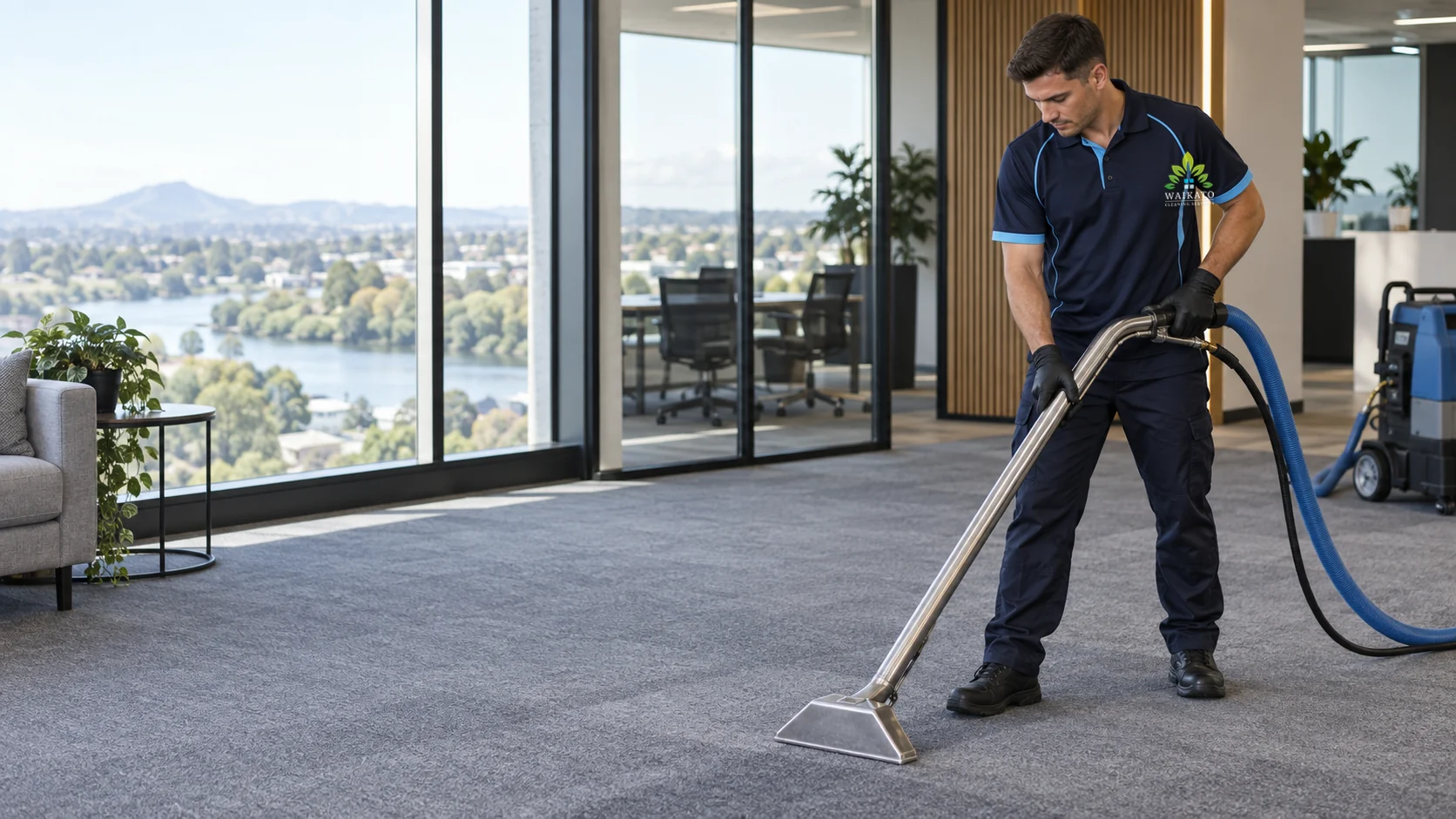
Carpets in homes and commercial properties can cost thousands of dollars, so it is important to choose a carpet cleaner who understands carpets, uses professional-grade commercial equipment, offers methods beyond basic steam cleaning and uses carpet-cleaning chemicals formulated specifically for carpets.
Professional carpet cleaning starts with inspecting the carpet and choosing a method that suits its fibres, condition, soil level, access and drying conditions. A Waikato Cleaning Services carpet clean includes dry vacuuming, pre-treatment, mechanical agitation where suitable, and either hot-water extraction or a low-moisture cleaning method.
The process finishes with a final inspection and practical drying guidance. The exact method and any specialist stain work should be agreed for the property rather than assumed before the carpet has been assessed.
Why do we assess the carpet before cleaning?
Carpets can differ in their fibres, construction, age and condition. The amount and type of soil can also vary across a family home, an office and a retail environment.
Before cleaning begins, we assess the carpet, visible marks, high-traffic areas and general level of soiling. We also consider access, furniture, occupied areas and the airflow or ventilation available for drying.
This assessment helps us select an appropriate cleaning method and identify work that may need separate treatment. It also gives us an opportunity to discuss realistic expectations before the clean begins.
Permanent wear or discolouration can sometimes look similar to soiling. Previous cleaning products or do-it-yourself stain treatments can also affect how a mark responds. Inspecting the carpet first is therefore an important part of planning the work—not simply an extra step before using the equipment.
What happens during our professional carpet-cleaning process?
The following six stages explain the general Waikato Cleaning Services process. The equipment and exact method can change according to the carpet, its condition and the agreed scope.
1. Inspect the carpet and agree on the plan
We begin by checking the selected carpeted areas, priority marks, access and general condition. Where the property has not already been assessed, this is also the time to confirm the cleaning scope and any additional work.
Not every carpet requires the same approach. The inspection helps determine whether hot-water extraction, a low-moisture method or another suitable plan should be used.
2. Dry vacuum accessible areas
Removing dry soil is an important part of the process. We dry vacuum the accessible carpet included in the scope, paying attention to areas such as edges, behind doors and reachable wardrobe spaces where applicable.
Vacuuming removes loose dirt, dust and debris before moisture is introduced. Furniture moving is not automatically included, so access and any items that need moving should be discussed when the work is arranged.
3. Apply suitable carpet pre-treatment
A suitable pre-treatment may be applied to help loosen soil before the main cleaning stage. High-traffic areas and visible marks may receive additional attention where appropriate.
The product and application need to suit the carpet and its condition. We do not assume that one chemical, concentration or treatment is appropriate for every property.
4. Agitate where appropriate
Mechanical agitation can help work the pre-treatment through the carpet and loosen embedded soil. Depending on the carpet and agreed service, this may involve a counter-rotating brush machine or an orbital scrubber.
Agitation is not an automatic step for every carpet. Whether it is suitable depends on the carpet, the selected method and the work included in the quote.
5. Use hot-water extraction (steam cleaning) or a low-moisture method
Hot-water extraction is often described by customers as steam cleaning. The method applies cleaning solution and heated water, then uses extraction equipment to recover moisture and loosened soil from the carpet.
Steam cleaning is not the only professional method available. A low-moisture or encapsulation method may be more appropriate for some carpets or commercial operating conditions. With encapsulation cleaning, a suitable solution is applied and mechanically worked through the carpet before the dried, encapsulated soil is removed through later vacuuming.
The two methods should not be treated as identical or as two compulsory stages of every clean. We select an approach according to the carpet, soil level, access, drying conditions and how the premises are used.
6. Complete a final inspection and explain drying
After cleaning, we complete a final inspection and, where the customer is available, review the finished areas with them. We also provide guidance to help with drying.
Drying conditions are different at every property, so we do not promise one fixed drying time. Weather, humidity, airflow, ventilation, carpet construction and the cleaning method can all affect how long the process takes. If required, we can use commercial air movers, especially in enclosed buildings with minimal airflow.
What changes between residential and commercial carpet cleaning?
The same assessment-led approach applies to homes and businesses, but the practical requirements can be different.
Residential carpet cleaning
In a home, planning may need to account for occupied rooms, furniture, children or pets, isolated marks and when each area can be used again. It is also important to discuss which items the customer will move and which areas will remain accessible.
Bedrooms, hallways and living areas may have different wear patterns. A hallway can show concentrated foot traffic while a room may have marks in only a few localised areas. The cleaning plan should reflect those differences.
Commercial carpet cleaning
Commercial carpet cleaning may need to be arranged around staff, customers, security access and business operating hours. Larger sites may also need staged cleaning so that selected areas can remain available. We also discuss any furniture moving, stained areas, mats such as entrance mats, and whether commercial air movers are needed to aid drying in enclosed buildings.
Offices and other commercial premises often have concentrated traffic around entrances, corridors, desks and shared spaces. The assessment may consider planned maintenance, disruption, drying conditions and whether hot-water extraction or a low-moisture method is more suitable for the site.
The goal in both settings is to use a method that fits the carpet and the way the property operates, rather than applying the same standard package everywhere.
What is normally included in carpet cleaning?
The agreed scope may include:
- Inspection of the carpet, condition and priority areas
- Dry vacuuming of accessible selected carpet
- Suitable pre-treatment
- Mechanical agitation where appropriate and included
- Hot-water extraction or an appropriate low-moisture method
- A final inspection
- Practical drying and aftercare guidance
What may need a separate assessment?
Some work requires additional time, products, equipment or risk assessment. The following services are not automatically included in a standard selected-area carpet clean:
- Moving furniture
- Cleaning rugs or entrance mats
- Specialist stain or odour treatment
- Pet urine or heavy pet-hair treatment
- Upholstery cleaning
- Commercial air movers or dehumidifiers
- Flood-related work
- Mould, decontamination or biohazard work
These requirements should be discussed before the job where possible. An assessment does not guarantee that every specialist item can be accepted or that every mark can be removed.
How should carpet be looked after while it dries?
Airflow and ventilation can help moisture leave the carpet and the room. Where it is safe and practical, opening windows or doors can help, while enclosed commercial buildings may require a different drying plan.
While the carpet is still damp:
- Avoid unnecessary foot traffic
- Keep dirty footwear off the cleaned areas
- Do not return furniture or other items until the carpet is dry
- Do not place metal or timber directly on damp carpet, as this can cause marks or discolouration
- Follow the site-specific guidance provided after the clean
Commercial air movers or dehumidifiers may be available where they are assessed as appropriate, but this equipment is not automatically part of the standard service.
Quick answers about professional carpet cleaning
Does every carpet need mechanical agitation?
No. Mechanical agitation can be useful for suitable carpets and soil conditions, but it is not required or appropriate in every situation. The decision depends on the carpet, selected method and agreed scope.
How long does professionally cleaned carpet take to dry?
In favourable conditions, professionally cleaned carpet is often dry enough for light foot traffic within approximately three to eight hours. Actual carpet drying time depends on the weather, humidity, ventilation, airflow, carpet construction and cleaning method.
Help the carpet dry by allowing fresh air to circulate and damp air to escape. Until it is completely dry, avoid dirty footwear and do not place timber or metal furniture directly on it, as these materials may leave marks. For enclosed commercial premises, WCS can also provide air movers and dehumidifiers where required.
How often should carpet be professionally cleaned?
The appropriate interval depends on foot traffic, household or business use, maintenance, spills, pets and the carpet manufacturer's guidance. A busy commercial entrance may need a different maintenance programme from a lightly used bedroom, so frequency should be based on the property rather than one universal timetable.
Arrange carpet cleaning for your home or business
Waikato Cleaning Services provides residential and commercial carpet cleaning in Hamilton and across the wider Waikato region. We assess the carpet, access, priority areas and drying conditions before confirming the appropriate scope and method.
Learn more about our professional carpet cleaning in Hamilton and Waikato, or contact Waikato Cleaning Services to discuss your home or commercial premises.
More Posts
How Much Does Commercial Cleaning Cost in Hamilton and Waikato?
How to Choose the Right Commercial Cleaning Company